-b76d3c0.png/:/rs=h:79,cg:true,m/qt=q:95)
.jpg/:/cr=t:0%25,l:0%25,w:100%25,h:100%25/rs=w:1209,h:680)
WOMANSHIP WORKPLACE INSIGHTS
Understand what your people are really carrying
Most workplace wellbeing programmes start with an answer.
We start by listening.
For everyone in your organisation. Women and men. Managers and teams.
Why Womanship
We look at the whole person.

Health, hormones, caring, money, grief, confidence....
We bring expertise across every life stage, because that's how real lives work.
We include everyone.
This isn't about men versus women. It's about understanding our differences, and why the gaps exist, so everyone can work better together.
When we asked, many men told us they wanted to know how to support their colleagues better.
We bring the right experts.
We bring the right experts.
Psychologists, therapists, doctors, coaches and leadership specialists.
Psychologists, therapists, doctors, coaches and leadership specialists.
Every one verified, and matched to what your people actually need.
How it works

We get to know you.
We act on what we hear.
We get to know you.
No two organisations are the same, so we don't use an off-the-shelf survey.
We start with a conversation about your people, your culture and what you want to understand.
We listen.
We act on what we hear.
We get to know you.
We design a confidential, anonymous survey around your workforce, open to everyone, whatever their gender or role.
No individual is ever identifiable.
Responses are anonymous and handled in line with GDPR. You see themes, never individuals.
We act on what we hear.
We act on what we hear.
We act on what we hear.
Your findings shape what comes next.
That might be a keynote, a leadership conversation or specialist sessions, delivered by verified professionals from our network.
Different workplaces. Different reasons for staying silent.
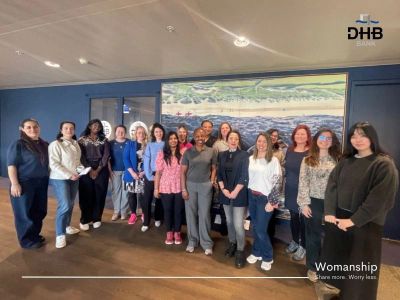
DHB Bank
What we heard: Women were carrying pressures that weren’t always visible at work. Energy, hormones and life stage, confidence and the emotional load of “holding it together” were all affecting how they experienced work - including how confidently they spoke up, made themselves visible and asked for support.
The conversations also highlighted an important distinction between confidence and competence: highly capable women can still experience self-doubt, hold back or feel they need to prove themselves.
What we did: We used anonymous employee insights to design a women-only session around sustainable performance, energy, confidence and voice at work. Rather than treating these as individual issues to “fix”, we explored what sits beneath them — from hormones and life stages to workplace dynamics and invisible pressures.
The session became a starting point rather than an endpoint. DHB created a cross-bank core group to build on what emerged and explore how the conversation could develop into something that supports everyone across the organisation.
“We want DHB Bank to be a place where everyone feels they have a voice and the support they need to grow. Partnering with Womanship allows us to bring expert insights directly to our team, helping us build an even more inclusive and sustainable workplace together.”
Adelaïde Mafubo, Head of HR, DHB Bank
North London Waste Authority
What we heard:
Almost everyone believed their colleagues would be kind.
Yet most still hadn't told anyone at work what they were going through.
Not because they feared judgement.
Because they didn't think anything would change.
And many of the men told us they wanted to learn how to support their colleagues better.
What we did:
A session for men and women, managers and teams, on periods, hormones, menopause, men's health, and how we support each other at work.
"Lots of people have come up to me afterwards saying how fascinating they found it, how much they learnt and how much they benefited from it. We really couldn't have asked for more!"
Sophie Wilkinson, Education & Engagement Manager, North London Waste Authority
Same result
People carrying things alone, and bringing them to work every day.
That's not a problem. It's an opportunity.
Led by...

Nicolette Lazarus, Founder of Womanship
Nicolette spent 25 years in advertising, where she ran Visa Europe and Lexus at Saatchi & Saatchi. She knows what it takes to perform at work while carrying things nobody sees.
Her research with nearly 500 women has shown how much goes unsaid, at home and at work.
Today she helps organisations from banking to the public sector understand what their people are really carrying, and brings men and women into the conversation together.
Lauren Valbert
Three decades in communications, training and coaching, with a focus on introverted, neurodiverse and marginalised clients.
She wrote the book on Imposter Syndrome, and now she helps people stop doubting themselves and take up the space they've earned.
Trusted By